Best 5 Yoga Mats in the US (2026)
As an Amazon Associate I earn from qualifying purchases.
What this means
When you buy through an Amazon link on this page, Amazon may pay a commission on a qualifying purchase. The price you pay is the same.
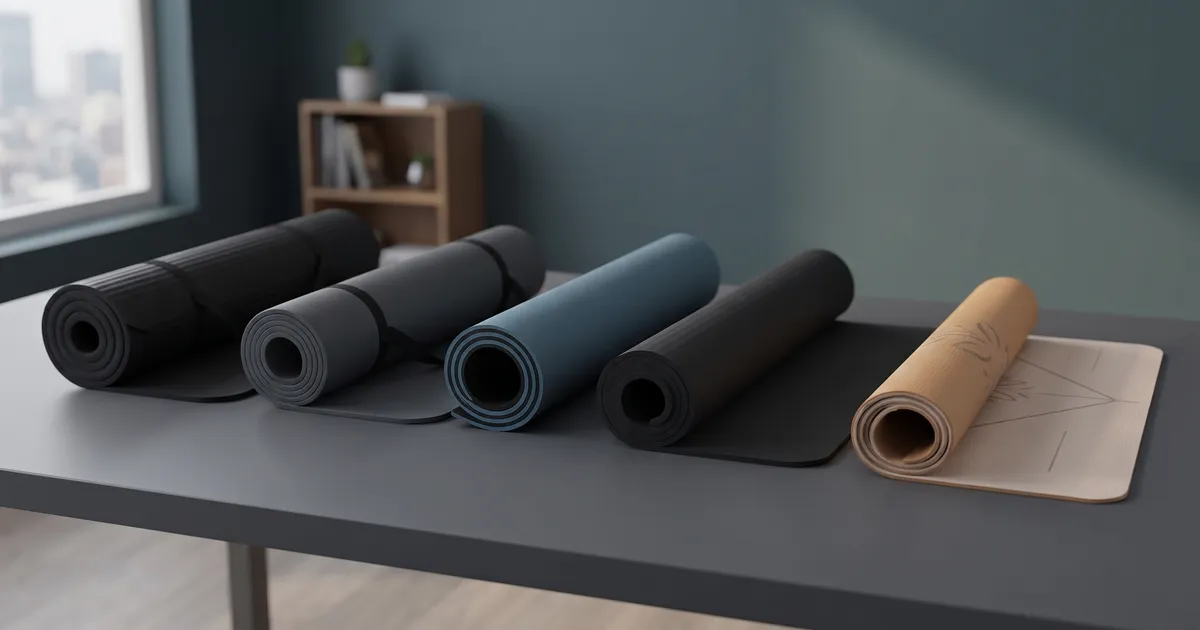
Hard floors quickly turn kneeling poses, planks, and seated stretches into uncomfortable pressure points on wrists, knees, and hips. Standard thin studio mats often fail to isolate joints from dense subfloors, while overly spongy pads introduce balance instability that disrupts standing poses and transitions.
Finding the right balance between joint protection and reliable floor traction is a common challenge. Mats across different brands often look identical in listings, yet their real-world foam density, surface texture, and long-term resistance to permanent indentation vary widely. Some materials slide against polished wood floors under dynamic movement, while others develop permanent creases or prove cumbersome to roll and store. This guide examines how five widely chosen models behave during daily practice, based strictly on direct owner reports.
So we read what the buyers quoted here report and set these 5 side by side. Every quote comes from a real review we keep on file. Our top pick comes first; if it is not your fit, the others are there for different needs.
How this list was built
By the numbers
- Ratings
- 151K
- Products compared
- 48
- Buyer quotes
- 85
- Picks
- 5
How the shortlist was drawn
- Popularity and stock status
- Cushioning and thickness
What each pick was judged on
- Cushioning and joint comfort
- Surface grip and floor stability
- Durability and material resilience
- Portability and maintenance
Read the full method
The editor selected each product based on listing availability and owner interest. All assessments of performance, comfort, and wear stem directly from buyer reviews, quoted as submitted. Context around those quotes is drawn from stated product specifications and standard yoga mat properties.
How the shortlist was drawn
- Popularity and stock statusChosen based on buyer volume, feedback, and customer ratings, selecting one model per brand that was listed new and in stock on Amazon US with an active price when this guide was assembled.
- Cushioning and thicknessSelected models spanning moderate floor-feel pads up to extra-thick comfort foam mats for floor work and joint relief.
What each pick was judged on
- Cushioning and joint comfortHow effectively the foam protects knees, hands, and spines on bare hard surfaces without excessive sinking.
- Surface grip and floor stabilityResistance to slipping under hands and feet as well as the mat's ability to stay planted on hardwood and tile.
- Durability and material resilienceHow well the foam resists tears, pet scratches, surface denting, and permanent pitting over long-term use.
- Portability and maintenanceEase of rolling, packing into included straps or carry bags, unboxing odor dissipation, and wipe-down cleaning.
- Prices are not listed. They move constantly and a stale number helps nobody — the retailer shows what it costs right now.
- No brand or retailer pays TrueValuePick for a place on this list: no ads, no paid placement. How a guide is put together
Our top 5 picks


Pick 1 of 5
Best overall
- Most recommended
- Built to last
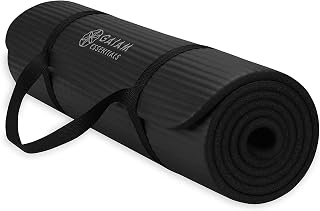
Gaiam Yoga Mat 05-63319
A 10mm high-density NBR foam mat that balances joint cushioning with ribbed grip for floor workouts and stretching.
Price and availability are shown on Amazon.
Best for
- Home floor workouts and stretching: 10mm foam cushions knees and hips against hard flooring
- Taller users: owners measure comfortable full-body coverage up to 5'8" and beyond
Skip it if
- You need a tight-fitting travel strap: the included harness allows the mat to shift or loosen during transit; #3 includes a full carry bag
Our verdict
This mat provides deep floor padding without losing basic stability, making it a reliable pick for stretching, Pilates, and joint-sensitive yoga. Owners highlight that the ribbed surface offers a textured feel that allows toes to grip during holds.
Day-to-day use is simple, rolling up easily after workouts. However, buyers note a strong factory smell upon first unboxing that requires unrolling on the floor to dissipate, and the lighter surface colors can show grease or body oil marks over time.
While the foam holds up through regular routines, owners report visible pitting and softened resilience in high-wear spots under hands and knees after a couple of years of steady use.
Pros & cons
Pros
- Deep 10mm cushioning: cushions pressure points on bare hardwood floors
- Ribbed surface texture: provides tactile grip for hands and toes
- Generous length: easily fits users 5'8" and taller during full-body stretches
Cons
- Noticeable unboxing odor: requires airing out unrolled before initial use
- Surface wear: repeated pressure at contact points causes visible pitting over extended use
- Loose carrying strap: the included harness can shift during regular transport
What owners say
I used it to carry the mat once, and the straps shifted around enough that the mat felt like it was going to slide out. I wouldn’t rely on it if you plan on carrying the mat around regularly.
Derek Frye · Buyer
It seems to have a permanent curve in the mat. Makes it easy to roll but there is definitely an up and down surface spreading the mat.
Rhone · Buyer
Nice and thick, but still has good stability. The ridges are really nice - they give the mat a nice feel and they help with grip.
Meg · Buyer
It is not only soft, cushioned very well, but it holds up very well while using it.
Jennifer Lewis · Buyer
Show 2 more quotesShow fewer
It's extra thick and extremely comfortable. Very good quality and last a very long time.
Virginia Robertson · Buyer
Only cons is not looking new ! It’s has some defects !
Antz · Buyer
Our conclusion
Choose this mat if you need thick floor cushioning and dependable surface grip for home workouts and recovery routines. If you plan to carry your mat across town frequently and want a dedicated carry case, #3 is the better fit.
Pick 2 of 5
Best for tall users
- Easiest to live with
- Owner favorite
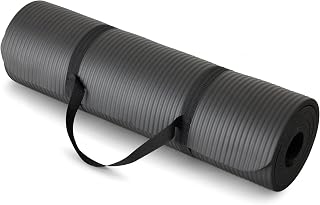
Amazon Basics Yoga Mat YM2001
A 74-inch extra-long 1/2-inch NBR foam pad designed for comfortable floor stretching and joint protection.
Price and availability are shown on Amazon.
Best for
- Tall exercisers: the 74-inch extended length provides ample coverage without feet hanging off the end
- Sit-ups, planks, and floor routines: 1/2-inch foam isolates joints from hard floors
Skip it if
- You focus on advanced one-legged balance poses: the thick plush foam creates slight instability during standing balancing
Our verdict
This 1/2-inch thick mat stands out for its extended 74-inch length, giving taller users room to stretch out completely. Owners report that it unrolls flat on hardwood and decks without edge curling, providing substantial padding for floor work like sit-ups and planks.
Wiping the non-absorbent foam clean with a damp cloth is quick, and the material resists holding odors. It rolls into a compact cylinder secured by an elastic carrying strap.
The main trade-off is foam firmness: while comfortable for floor work, standing sequences can feel a bit too cushy for steady balance, and one owner noticed the mat shifting during active standing movements.
Pros & cons
Pros
- Extended 74-inch length: fits taller individuals comfortably
- Plush 1/2-inch thickness: completely protects knees and elbows on hard floors
- Lays flat immediately: edges unroll without persistent curling
- Low maintenance: non-porous surface wipes clean and resists absorbing sweat
Cons
- Soft for standing balances: thick foam gives too much squish for advanced balancing
- Can shift during standing drills: high-impact standing routines may cause the mat to move
What owners say
It is not very durable after 1 year - I saw a hole in the mat on the smooth side start to form recently and I make a point to never store things on top of the mat or to walk on it.
GK · Buyer
I felt stable doing floor work and standing poses, as well as downward dog, bird dog etc. I have not experienced any slippage on the hard wood floor or hard wood deck.
Michelle · Buyer
The surface has a light texture that helps with grip. It’s not super “sticky” like premium yoga mats, but it’s stable enough for general workouts, stretching, and beginner yoga sessions.
Berit L. · Buyer
It has a good amount of cushioning, stays in place well, and is easy to roll up and put away when I’m finished.
Everyday buyer · Buyer
Our conclusion
Pick 3 of 5
Best for travel and studio classes
- Easiest to live with
- Least upkeep

Gruper Yoga Mat
A lightweight 0.75 kg TPE mat with double-sided anti-skid texture and a dedicated storage bag.
Price and availability are shown on Amazon.
Best for
- Commuting to studio classes: weighs just 0.75 kg and includes a shoulder carry bag
- Active yoga flows: double-sided textured grip holds hands and stays planted on smooth floors
Skip it if
- You have pets around your exercise area: thin TPE material is susceptible to punctures from animal claws; #1 uses denser foam
Our verdict
This TPE mat distinguishes itself from bulkier NBR pads by being very lightweight and easy to carry to classes. Owners report that its double-sided grip provides strong hand traction during active yoga, Pilates, and stretching without sliding on the floor.
The material is odorless out of the box and wipes clean quickly with a damp cloth. It comes equipped with both a strap and a zippered carry bag, making transport straightforward.
The catch is material vulnerability to sharp objects. One owner notes that dog claws scratched up the surface quickly, and another found the carry cover tight to slide the rolled mat back into.
Pros & cons
Pros
- Very lightweight: at 0.75 kg, it is effortless to sling over a shoulder
- Grippy double-sided texture: stops hands from slipping during dynamic poses
- Complete travel bundle: includes both a carry strap and a dedicated storage bag
- No strong chemical smell: usable immediately without long off-gassing periods
Cons
- Prone to claw damage: pet paws and claws can easily scratch or puncture the TPE foam
- Tight storage bag: sliding the rolled mat back into the case can feel cumbersome
What owners say
It’s also nice and thick, so when I’m doing exercises on the floor, I don’t feel the hard floor underneath me or my feet getting uncomfortable.
alejandra · Buyer
The surface is soft and pleasant to the touch, but at the same time it has enough grip to prevent it from slipping during exercises.
Rodríguez · Buyer
The non-slip surface gives me a secure grip during workouts, yoga, and stretching, and it stays in place well on the floor.
Lianna Barcelo · Buyer
The cover is unusable - almost impossible to put the mat back. Had to through it out the first day...
Mike M · Buyer
Our conclusion
Choose this mat if you want a lightweight, non-slip surface to take back and forth to studio sessions. If your workouts happen in a home gym where pet claws or rough handling might tear the surface, consider #1.
Pick 4 of 5
Best for joint pain relief
- Owner favorite

Retrospec Yoga Mat 4423
A 1-inch thick foam pad designed to eliminate pressure on knees, hips, and lower back during seated and kneeling routines.
Price and availability are shown on Amazon.
Best for
- Kneeling and seated routines: 1-inch thick padding protects sensitive knees and tailbones
- Rehabilitation and floor stretching: isolates joints completely from hard floors
Our verdict
This mat provides the maximum cushioning in the line-up, featuring a full 1-inch layer of foam that relieves pressure on sore knees, hands, and back joints. Owners report it stays grounded during floor routines without sliding.
The surface is ribbed and easy to clean with mild soap and water. However, its immense thickness creates a bulky roll that takes up noticeable space in a closet or workout corner.
The primary compromise is balance stability: standing poses sink into the foam, requiring users to step onto bare flooring for balance-heavy sequences. Additionally, softer 1-inch foam can be punctured by pet claws.
Pros & cons
Pros
- Maximum 1-inch thickness: completely protects joints during kneeling and floor work
- Non-slip ribbed surface: stays securely planted on floors during use
- Supportive density: provides heavy padding without feeling completely flimsy
Cons
- Unstable for standing balance: users report needing bare floor for one-legged balance poses
- Bulky roll: thick material is cumbersome to store and carry
- Vulnerable to punctures: sharp objects or pet claws can pierce the thick foam
What owners say
No strap included though. There was a piece of thin plastic wrapped around it but nothing that I would associate with a carrying strap. Definitely not the strap shown in the product pictures.
Buyer
Now when I’m trying to do something where I need my balance I do have to stand on the bare floor but in kneeling positions or sitting positions this is my go to.
Victoria Harris · Buyer
It did also come without the strap shown but reaching out to the company resolved that quickly.
Brittany · Buyer
It provides excellent cushioning for my knees and back, and it stays in place during workouts.
Husam Khalifah · Buyer
Our conclusion
Get this mat if severe joint tenderness or floor pressure is your main obstacle during floor exercises. If your routine centers on standing balance flows and you want a compact roll, #5 is a much firmer alternative.
Pick 5 of 5
Best for pose alignment
- Great for beginners
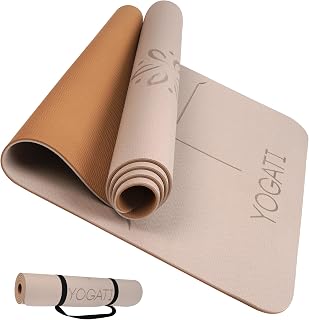
YOGATI Yoga Mat Y1
A TPE yoga mat featuring integrated posture alignment markings and balanced padding for steady standing poses.
Price and availability are shown on Amazon.
Best for
- Beginners learning form: etched alignment lines guide palm and foot placement
- Users practicing standing poses and planks: dense surface resists sinking
Our verdict
This mat features built-in alignment guides etched directly into the surface, helping yogis check their hand and foot positioning across poses. Owners note that it offers a balanced level of padding that supports joints without the deep sinking seen in thick foam pads.
At 820 grams, it rolls up fast and includes a shoulder harness for hands-free carrying. The material provides sufficient surface stickiness for dry yoga practices.
The catch is floor adherence on very smooth surfaces, where one buyer observed the mat shifting. In addition, leaving the roll strap cinched tightly can leave permanent indentation creases in the foam.
Pros & cons
Pros
- Etched alignment lines: visually assists hand and foot placement
- Firm joint support: provides comfortable padding without sinking during planks
- Lightweight construction: 820g weight makes studio transport simple
Cons
- Can slide on smooth floors: underside may shift during vigorous transitions
- Strap creasing: tight harness straps can cause permanent indentation marks
What owners say
I've been using this mat for several months. It has the perfect amount of padding. I love that it is longer than many mats (I'm 5'7"). It has been sufficiently sticky for my yoga practice.
Paula · Buyer
Super thick! And comfy! I don’t have to worry about it being too thick and sinking into it! Great for planks!
White bed spread · Buyer
Only problem I have is when use the strap holder it creases the mat and doesn’t come out.
Taylor · Buyer
But this mat does not stick to the ground well, it will slide or move.
Hadlie · Buyer
Our conclusion

Buying guide
Matching Foam Thickness to Your Practice
Yoga and exercise mats vary greatly in thickness. A standard thin mat (around 1/4 inch or 6 mm) keeps you close to the ground, which aids balance during standing poses like tree pose and warrior sequences. Thicker mats (1/2 inch to 1 inch, such as #1, #2, and #4) provide plush joint padding for floor exercises, Pilates, stretching, and physical therapy, though the extra squish can make one-legged balancing poses more challenging.
Material Differences: NBR vs. TPE
- NBR Foam: Highly cushioned, softer feel, and lightweight for its bulk. It absorbs joint impact well on hard concrete or hardwood floors. However, softer NBR surfaces can develop impressions under repeated heavy pressure and may hold cosmetic oil marks.
- TPE Foam: Offers denser, firmer support with a lighter overall footprint and textured dual-sided traction. It resists stretching during standing sequences but is thin enough that pet claws can easily puncture it.
Grip and Floor Traction
Surface texture dictates both hand grip and mat stability. Ribbed or laser-textured patterns prevent palms and heels from sliding during downward dog and sweaty routines. Mats without sufficient underside grip may shift across slick flooring during active transitions.
Mistakes buyers keep making
Drawn from what buyers complain about in their reviews.
Allowing pets near foam mats
Soft NBR and lightweight TPE materials are easily punctured or torn by dog and cat claws.
Expecting high balance stability from 1-inch foam
Extra-thick mats absorb joint pressure effectively on the floor, but standing balance poses often require stepping onto bare floor to avoid wobbling.
Skipping initial ventilation
Many synthetic foam mats carry a noticeable factory smell out of the box and need to be laid flat for 24 to 48 hours to air out.
Over-tightening strap holders
Leaving tight elastic harness straps cinched on softer mats can cause permanent indentations and creases.
Frequently asked questions
How were the products in this guide chosen?
The editor selected the products based on buyer purchase volume, rating trends, and reviews, picking one model per brand that was listed new and in stock on Amazon US when the guide was created. All assessments reflect buyer review excerpts.
How do I remove the initial smell from a new yoga mat?
Unroll the mat and leave it flat in a well-ventilated space for 24 to 48 hours, which owners report effectively clears out the initial foam odor.
Can I wear shoes while exercising on these mats?
Softer foam and TPE mats can dent, scuff, or tear under shoe tread. They are primarily designed for barefoot workouts or soft socks.
Which mat thickness is best for sensitive knees?
Mats with 10 mm (2/5 inch) to 1-inch foam provide thick padding that cushions knees, elbows, and hips directly off hard floors.

Justin Avery
Editor, Fitness guides
Justin Avery covers fitness gear for TrueValuePick, building each guide from what owners report in public about the trackers, weights and home gym gear they train with.
Compiled this guide from buyer reviews, each one checked against an archived copy of the listing it came from.